JOURNAL / WINDOWS
These are the two systems we are asked for most in homes and hotels. Both work well in solid wood, but they solve different things, and the choice should follow the opening and how each room is used.
Tilt-and-turn
It opens two ways with the same handle: it swings to the side to air the room fully or clean the glass, or tilts in a few centimeters from the top to ventilate with the window almost closed. Its hardware locks at several points around the leaf and presses it against the frame’s seals, which is why it seals best.
Sliding
Its leaves run on a track, one in front of the other. They take up no space when opening and allow wide openings and large windows. It seals with gaskets and brush seals along the track; well made, it closes well, although it doesn’t press the leaf like a tilt-and-turn.
How to decide
- If insulating from cold, heat or noise is the priority: tilt-and-turn.
- If the leaf can’t swing into the room because of furniture, a bed or a curtain: sliding.
- To ventilate at night or in light rain without opening fully: tilt-and-turn in the tilted position.
- For very wide openings or opening onto a terrace: sliding, or lift-and-slide if the leaves are large.
- To clean the outside of the glass from indoors on upper floors: tilt-and-turn.
A middle ground: lift-and-slide
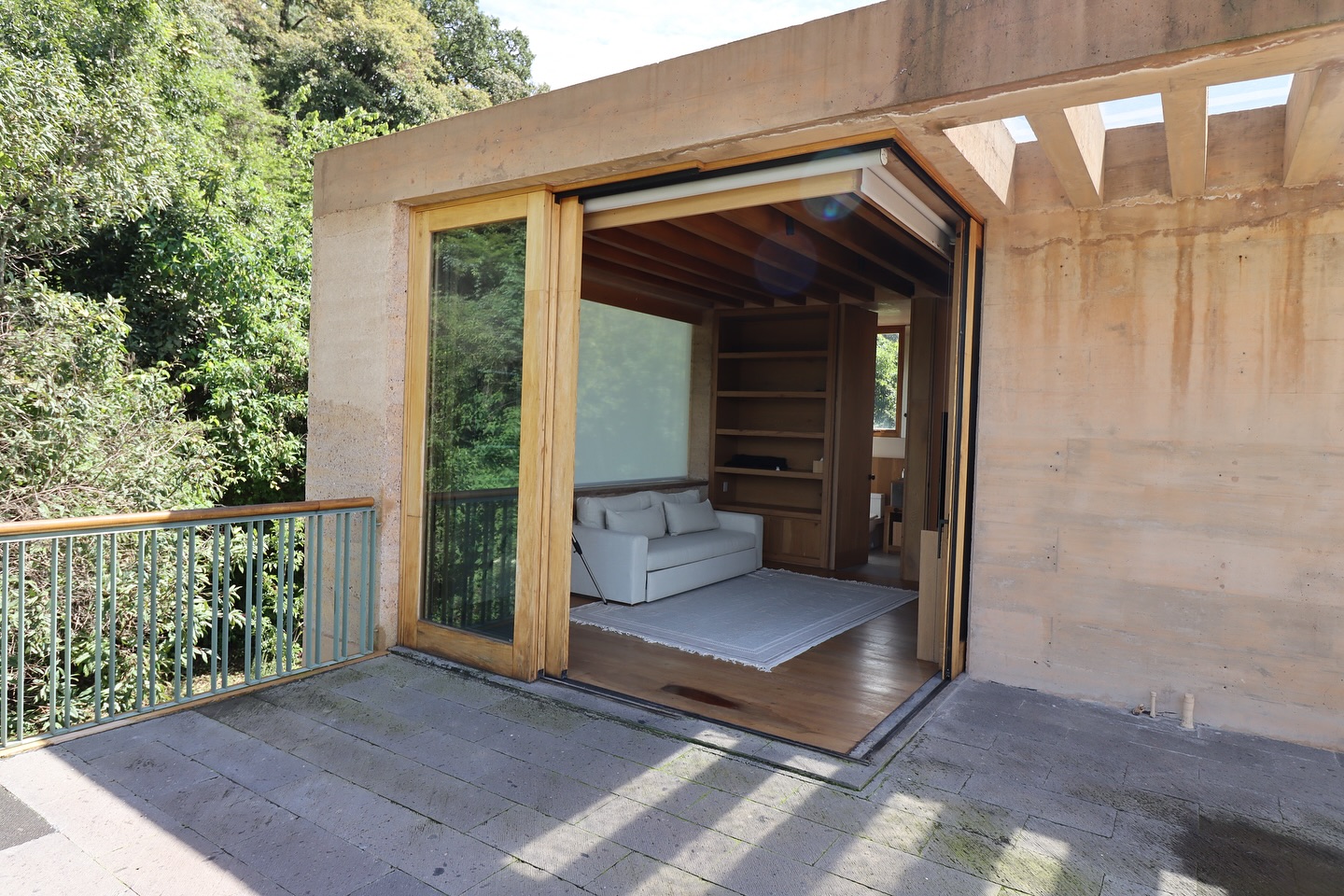
When the opening is large and good sealing matters too, lift-and-slide is the answer: turning the handle lifts the leaf a few millimeters so it slides, and on closing it lowers and settles onto its seals. It is what we made in tzalam for Estudio Iturbide in Mexico City.
All three can take double or triple glazing. In one house it is common to combine them: tilt-and-turn in bedrooms and bathrooms, sliding or lift-and-slide toward the terrace.